

A Regulated Nervous System Is an Act of Faith
The bracing you have learned to live with is costing you more than comfort. What Scripture says about rest, trust, and stewarding the body God gave you to carry your calling.


"Be still, and know that I am God" ~ Psalm 46:10
You can love God and still live braced. That is the part almost no one says out loud. You can pray in the morning, believe every word of it, and still move through the day with your shoulders near your ears, your jaw set, your mind two steps ahead of wherever your body is standing. Faith and a nervous system stuck in survival mode can occupy the same person for years.
Here is what Scripture makes plain, and what I want to sit with you in. A regulated nervous system is an act of faith, because the body gradually learns to live from the trust the heart has placed in God, and it is a matter of stewardship, because the body carrying your calling was entrusted to you along with the calling itself. The bracing is not a character flaw. It is a body doing exactly what God designed it to do, held far past the season it was designed for. And Scripture has more to say about the way home than most of us were ever taught.
Name the problem.
A body that never got the message
God built the alarm on purpose. The quickened pulse, the narrowed focus, the surge that moves you out of the road before you have consciously seen the car, all of it is the protective design of a body He called fearfully and wonderfully made ~ Psalm 139:14. The design is good. The design assumes the danger ends.
That is where our age breaks the arrangement. The alarms get pulled by inboxes and invoices and news alerts and the low hum of responsibility, dozens of times a day, for years, and the all-clear never arrives. A system built for the sprint gets held in a marathon. The body keeps its post because no one ever told it the emergency was over.
You know the cost even if you have never named it this way. Sleep that does not restore. A jaw you find clenched at stoplights. The inability to sit through a quiet moment without reaching for the phone. Feeling numb where feeling used to be, or feeling everything at once with no room between the stimulus and the reaction. Praying with your body still scanning the room.
And here is the quiet shame underneath it, the one that keeps people from bringing this to God at all. If the peace of God guards hearts and minds, why is mine still braced? The question deserves a real answer rather than a rebuke.
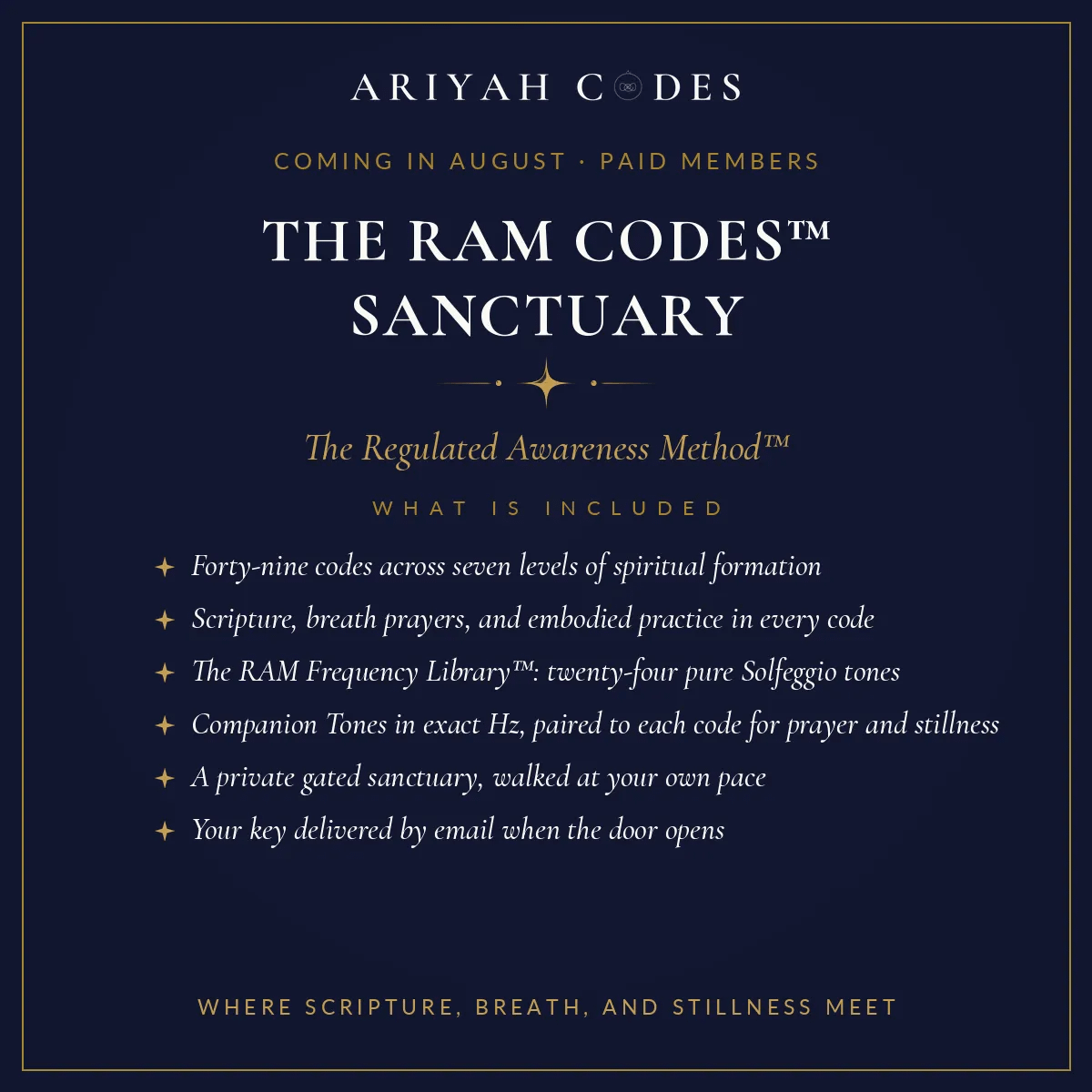
Launching In August for Annual Subscribers
Watch how God treats a servant who has run himself into the ground. Elijah had just come off the greatest public victory of his ministry, and he collapsed under a broom tree and asked to die. God’s response is the most tender correction of a burned-out person in all of Scripture, and notice what it is not. No sermon. No diagnosis of his faith. An angel touched him and said, “Get up and eat.” He ate and slept. The angel came back a second time with the same instruction and one line of explanation: “for the journey is too much for you” ~ 1 Kings 19:5-7.
Food. Sleep. Food. Sleep. Then, much later, the gentle whisper. God ministered to the prophet’s body before He said a single word to the prophet’s soul. The shepherd psalm keeps the same order. “He makes me lie down in green pastures, he leads me beside quiet waters, he refreshes my soul” ~ Psalm 23:2-3. The lying down comes first. The refreshing of the soul follows it. And when the disciples came back from ministry with no margin left, Jesus did not schedule them a deeper teaching. He said, “Come with me by yourselves to a quiet place and get some rest” ~ Mark 6:31.
A faith that treats the body as irrelevant to peace is working from a thinner Bible than the one we actually have. And then there is the boat. A furious squall came up on the lake; the waves were breaking over the sides; the boat was nearly swamped, and Jesus was in the stern, asleep on a cushion ~ Mark 4:37-38. The disciples woke Him with the question every exhausted person has prayed in some form. Do you not care if we drown? He calmed the water, and then He asked them, “Why are you so afraid?” ~ Mark 4:40.
Read that question as revelation rather than rebuke. Christ was not asleep because the storm was small. The storm was real enough to frighten career fishermen. He slept because He knew whose hands the boat was in. Peace, in that account, is trust in the Father’s keeping while the wind is still running, and Jesus carried it in His body in the middle of genuine danger.
So the settled life is not something reserved for calm seasons. It is something Christ Himself demonstrated in the worst of one.
Every anxious body is telling itself a story, usually without words. The story is some version of this: depends on me, or if I stop watching, it falls apart, or there is no one coming. Bracing is what a body does when it believes it is alone with the weight.
So when you deliberately let the exhale run long, when you lie down before the list is finished, when you keep a Sabbath in a week that did not earn one, you are not merely calming yourself. You are making a physical confession that God is holding what you have been gripping. “In vain you rise early and stay up late, toiling for food to eat, for he grants sleep to those he loves” ~ Psalm 127:2. Sleep, in that verse, is a gift given to the beloved. Rest taken before the work is finished is one of the most honest professions of trust a person can make, precisely because the circumstances have not changed and you lay down anyway.
This is why the psalmist speaks to his own soul in the second person. “Return to your rest, my soul, for the Lord has been good to you” ~ Psalm 116:7. He is instructing himself, out loud, because the settling does not happen automatically. It is practiced. And Jesus made stillness a command with a physiology attached: “Be still, and know that I am God” ~ Psalm 46:10. The stilling comes first, and the knowing follows it, in that order, because a body in alarm has very little room left for knowing anything.
Faith you hold only in your head is faith your body has not yet been told about. Regulation is how the trust gets down into the frame.
“Do you not know that your bodies are temples of the Holy Spirit, who is in you, whom you have received from God? You are not your own” ~ 1 Corinthians 6:19. If the body is a temple, then tending it is temple-keeping, and temple-keeping is sacred work rather than self-indulgence.
Look at what a depleted body actually costs the work God entrusted to you. Patience thins first, and the people closest to you feel it before anyone else does. Discernment gets loud and reactive when it needs to be quiet and slow. Creative capacity dries up, because making requires a margin that survival mode spends on watching. Generosity contracts, since a person running on empty guards what little is left. And presence, the thing your family and your calling most need from you, becomes the first casualty, because presence is impossible in a body that is always somewhere in the next ten minutes.
You cannot steward a calling from a body you are quietly running into the ground. The regulation is not a break from the work. It is part of the keeping. Jesus modeled this without apology in a ministry with genuine urgency and a fixed clock. “Jesus often withdrew to lonely places and prayed” ~ Luke 5:16. Often. With crowds still waiting. If withdrawal was necessary for Him, the pace you have been holding is not a sign of your seriousness.
Scripture-rooted Practices for a Settling Body
None of these are techniques to master. They are small acts of trust the body can actually receive, each one joined to something true.
Let the exhale carry Scripture.
Breathe in slowly, and let the breath out longer than you took it in, because the long exhale is the body’s own signal that the danger has passed. Let a short line keep time with it. In: “The Lord is my shepherd.” Out: “I lack nothing” ~ Psalm 23:1. A few unhurried minutes are enough. When your attention wanders, and it will, bring it back the way you would guide a child back to the path, without scolding.
Practice stillness as obedience.
Sit once a day with your feet on the floor and your hands open, attention on God’s nearness rather than the day’s ledger ~ Psalm 46:10. The first minutes will be noisy. Stay anyway. Stillness is a skill a braced body relearns by repetition, and the noise is part of the relearning rather than evidence that you are doing it wrong.
Take the lie-down of faith.
Once this week, lie down in the middle of the undone list for twenty minutes, on purpose, as a physical declaration that God runs the household and you keep it ~ Psalm 127:2. Notice what your body does with permission it has not been given in a while.
Keep one boundary, gently and firmly.
One protective no, held without a paragraph of justification, teaches the body that it is no longer trapped. Nervous systems believe decisions more readily than intentions.
Bring the anxiety to God as an invitation rather than a verdict.
“Cast all your anxiety on him because he cares for you” ~ 1 Peter 5:7. Say the actual thing out loud in prayer, including the part where you are tired of feeling this way. Then present the request and let the peace do its guarding work ~ Philippians 4:6-7.
Let wise care be part of the stewardship.
If your body has been in survival mode for a long time, or something heavier sits underneath it, seeing a doctor or a therapist is itself an act of faithful keeping. “Plans fail for lack of counsel, but with many advisers they succeed” ~ Proverbs 15:22. God is unembarrassed to heal through skilled hands, and these practices walk alongside that care rather than in place of it.
A body that spent years learning vigilance will spend a while learning safety, and the pace is part of the mercy. You are being re-formed rather than rebooted, and formation has always moved at the speed of trust.
Along the way the promise in Philippians holds with more precision than we usually notice. Present your requests to God, “and the peace of God, which transcends all understanding, will guard your hearts and your minds in Christ Jesus” ~ Philippians 4:7. Hearts and minds. The guarding was always meant to reach the whole person.
So bring your body with you into the life of faith. It has been standing watch for years, and it has done that job well. Let it learn, slowly, in the keeping of a good Owner, that it is safe enough to rest.
Key Takeaways
The bracing is a God-given protective design held past the season it was made for, rather than a failure of faith.
Scripture ministers to the body first in depletion. God gave Elijah food and sleep before conversation ~ 1 Kings 19:5-7.
Christ Himself slept through a genuine storm ~ Mark 4:37-38, which shows a settled body is possible in the middle of real danger rather than only in calm seasons.
Rest is an act of faith because it is a physical confession that God holds what you have been gripping ~ Psalm 127:2.
Regulation is stewardship of the temple ~ 1 Corinthians 6:19, and a depleted body quietly taxes patience, discernment, generosity, and presence.
The practices are small and repeatable: the long exhale joined to Scripture, daily stillness, real rest, one kept boundary, honest prayer, and wise professional care.
FAQ
What does the Bible say about anxiety? Scripture treats anxiety as a burden to bring to God rather than a verdict to carry alone. “Cast all your anxiety on him because he cares for you” ~ 1 Peter 5:7 is written as an invitation, and Philippians 4:6 reads the same way. A body held in survival mode is a condition to be tended with care, and tending it is faithful stewardship.
Why do I still feel anxious if I trust God? Because trust lives in the mind before it reaches the body, and the body learns more slowly. Years of sustained pressure teach a nervous system to stay on watch, and that learning does not undo itself the moment you believe something true. This is why Scripture pairs stillness with knowing ~ Psalm 46:10, and why the psalmist has to instruct his own soul to return to its rest ~ Psalm 116:7.
Is caring for my nervous system self-indulgent? Your body is the temple of the Holy Spirit ~ 1 Corinthians 6:19 and the vessel carrying everything God has entrusted to you. Tending it is temple-keeping. A depleted body has less patience for the people you love and less discernment for the decisions you face, so the keeping serves the calling rather than competing with it.
What does the Bible say about rest? Quite a lot. God built rest into creation itself and into the week. Jesus withdrew to quiet places even with crowds waiting ~ Luke 5:16, sent tired disciples away to rest ~ Mark 6:31, and the shepherd psalm has God making His people lie down before He refreshes their souls ~ Psalm 23:2-3. Sleep is called a gift to those He loves ~ Psalm 127:2.
Where do I start if I am exhausted right now? Start with the smallest true thing. Three slow breaths with a longer exhale and one line of Psalm 23. Then sleep, and eat something, the way God ministered to Elijah before He said anything else ~ 1 Kings 19:5-7. If the exhaustion has been long or heavy, bring in a doctor or therapist as part of the care rather than as a last resort.
You have been standing watch for a long time. The Owner of the house is awake, and He has been all along.
With love,
Ari’yah
Go Deeper
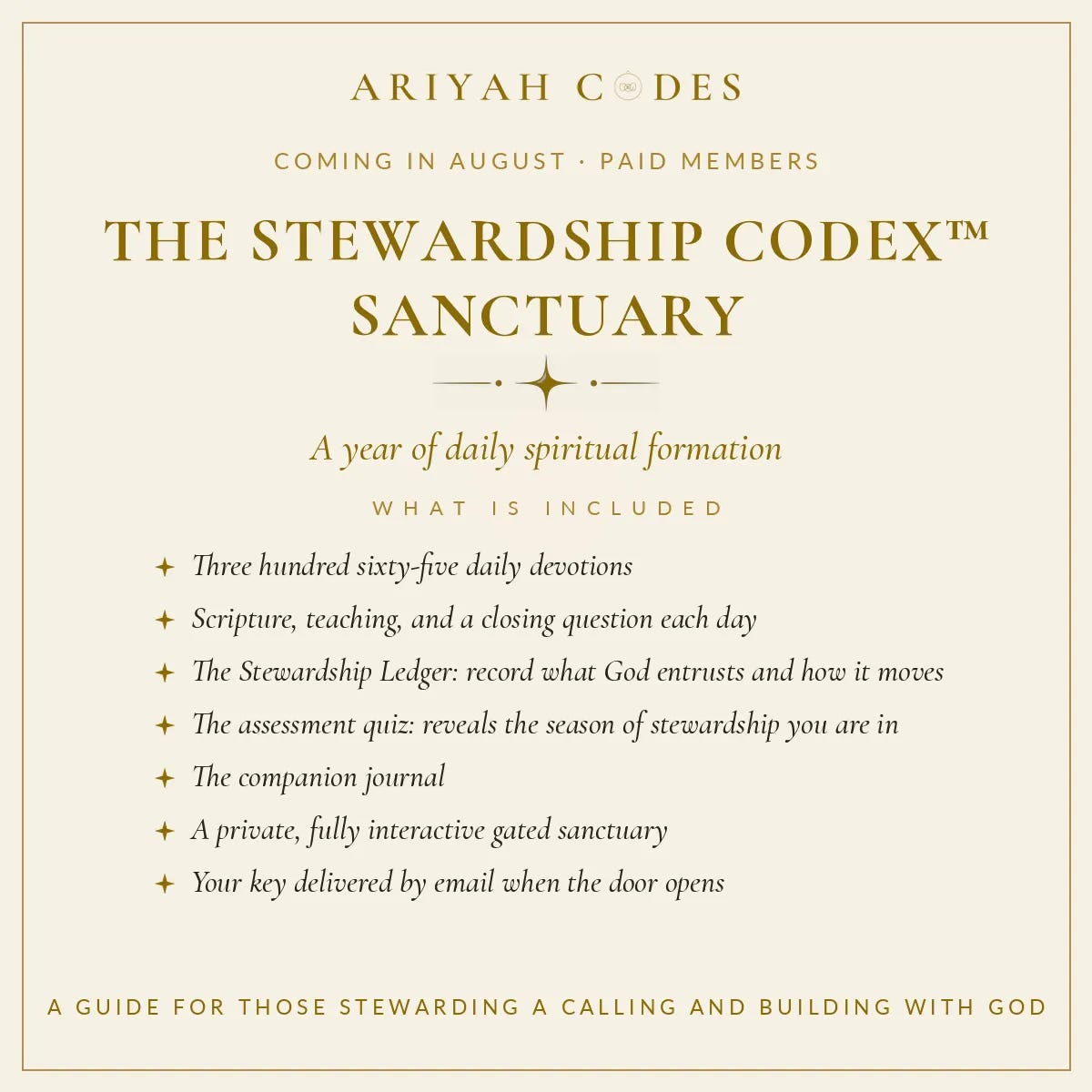
Three hundred sixty-five daily devotions with a Steward’s Ledger™ and the Steward’s Compass™ assessment, for the reader who wants formation that returns rather than inspiration that fades.
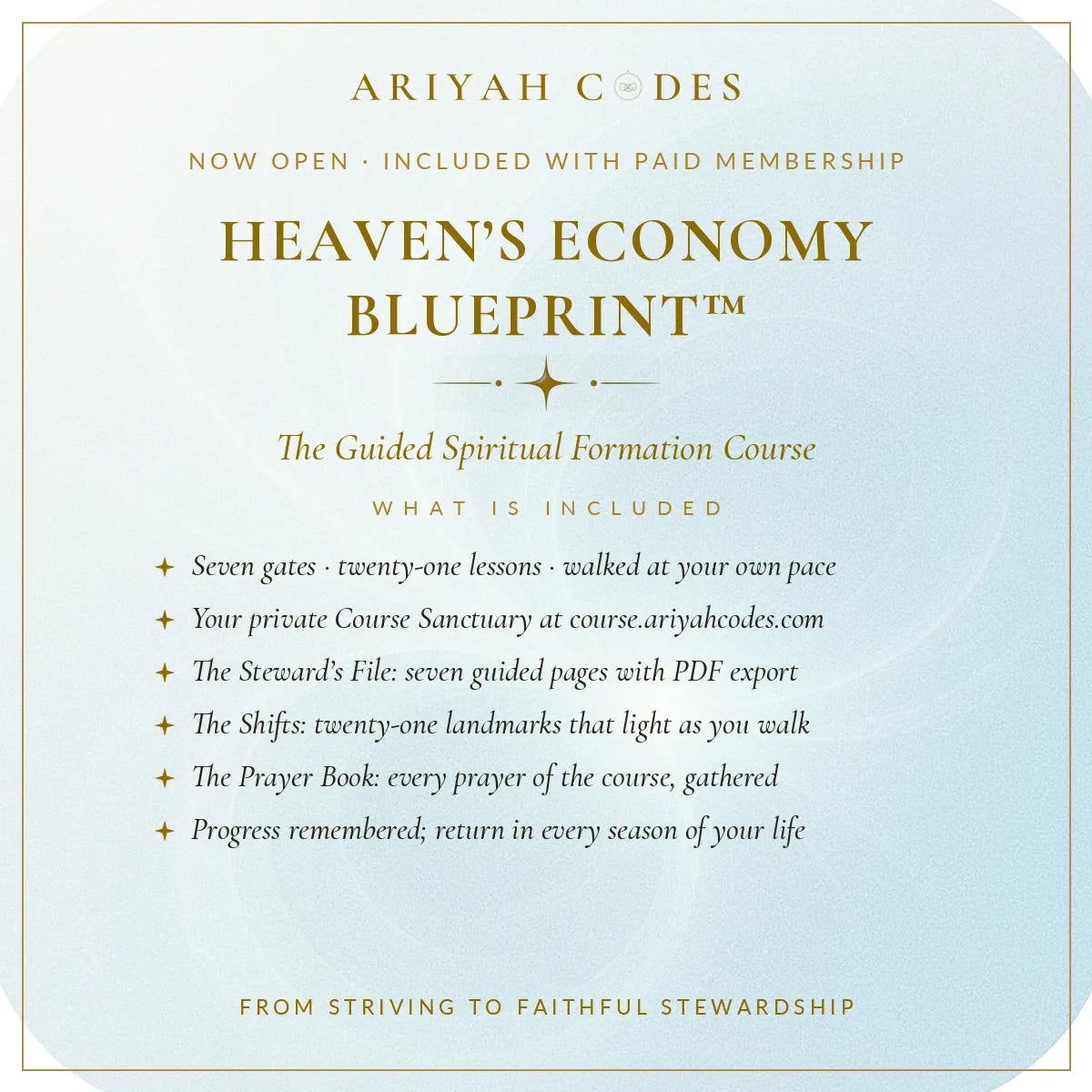
Heaven’s Economy Blueprint™ Course
Seven gates and twenty-one lessons on what God has entrusted to you and how to steward it faithfully.
Heaven’s Economy Blueprint Podcast
A quiet place to return to Scripture, remember what God has entrusted to you, and learn to steward every part of life according to His design.
Last Updated: August 2026